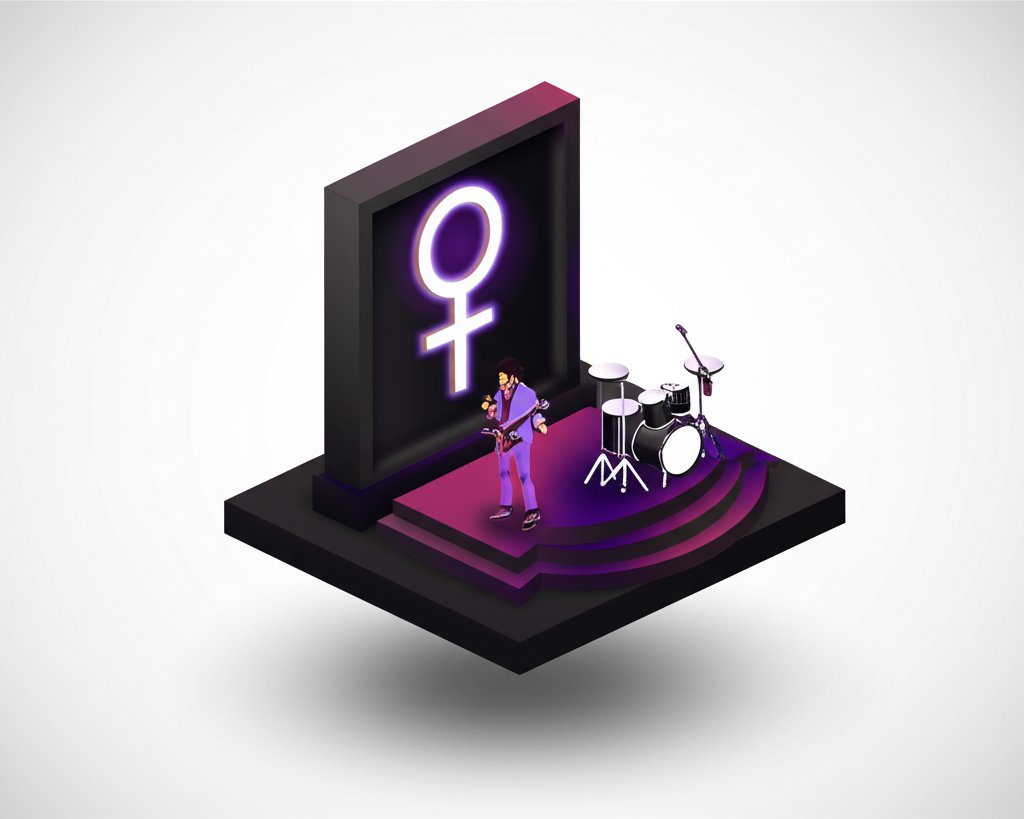
Navigating the monumental discography of Prince Rogers Nelson to pinpoint the truly definitive tracks—or even just starting a personal journey through his work—can feel like a delightful challenge. When we talk about prince songs ranked, we’re not just listing chart positions; we’re dissecting a legacy, exploring the artistic decisions, cultural impacts, and sheer musical genius that defined one of history's greatest artists.
At a Glance: Decoding Prince's Ranked Legacy
- Understanding the "Why": Discover the stories and musical innovations behind Prince's most acclaimed tracks, from chart-toppers to boundary-pushing deep cuts.
- Beyond the Hits: Learn how iconic songs like "Purple Rain" and "1999" came to be, and what makes them enduring fan favorites.
- The Provocateur: Explore tracks that ignited controversy and shaped music industry standards, reflecting Prince's fearless artistic vision.
- Unpacking the Vault: Get insights into how unreleased concepts, alter egos, and thematic album structures influenced his released material.
- Charting Your Own Course: Gain practical strategies for exploring Prince's vast catalog, moving beyond casual listening into true appreciation.
The Pillars of His Popularity: Chart-Toppers and Cultural Shapers
Prince's commercial success was often a direct reflection of his groundbreaking creativity. Songs that soared up the charts frequently did so because they were unlike anything else, defining eras and influencing countless artists. Take "Purple Rain" from the iconic 1984 album and film of the same name. Its anthemic chord progression, largely shaped by Wendy Melvoin, almost took a completely different form, initially conceived as a country duet with Stevie Nicks who ultimately declined to write lyrics. This magnum opus, the last song Prince ever performed live, also hides an extra verse on its sleeve, linking its title to a cleansing storm on Judgement Day—a powerful example of his lyrical depth often found beyond the immediate listen.
Then there's "1999," a track from 1982 that became an unlikely party anthem for impending apocalypse. Inspired by the Nostradamus documentary The Man Who Saw Tomorrow and reflecting his Seventh Day Adventist upbringing (which taught not to fear the end of the world), its infectious ARP Omni-2 synthesizer riff was so potent it reputedly inspired Michael Jackson's "Thriller" and Phil Collins' "Sussudio," later even being re-used by Prince himself on "Fury" in 2006.
The Purple Rain album alone is a treasure trove of hits that consistently rank high among fans. "Let's Go Crazy," the album opener, became its second number-one single, setting the stage for the album's dynamic energy. "Take Me With U," while not a chart-topper, stands out for its distinctive drum solo that opens and closes the track, showcasing his musicality even in seemingly lighter moments. And "I Would Die 4 U" presents a complex lyrical landscape, sung from the perspective of Jesus Christ with heavily religious lyrics referencing the Holy Trinity—a profound statement wrapped in a dance-pop package.
Even in later eras, Prince maintained his knack for crafting hits. "Cream" from 1991's Diamonds and Pearls marked his final chart-topping single, a testament to his enduring appeal and ability to adapt. And for a glimpse at his early hit-making prowess, "I Wanna Be Your Lover" from 1979 blended disco, funk, and pop so seamlessly it became his breakout track, foreshadowing the genre-fluidity that would define his career.
Provocation and Purpose: Songs That Pushed Boundaries
Prince was never one to shy away from controversy, often using his music to challenge societal norms and express unbridled sexuality. These tracks, while sometimes controversial, are crucial for understanding his artistic fearlessness and impact. "Darling Nikki," from Purple Rain, was intentionally created to add a sense of danger to the album. Its explicit lyrics famously became a catalyst for Tipper Gore and the Parents Music Resource Center (PMRC), leading to the creation of parental advisory stickers. Beyond the controversy, the song is a melodic reimagining of Vanity 6's "3×2=6" and even contains a hidden Christian message audible when played backward, alongside an unsung verse on the record's inner sleeve. It's a prime example of Prince's layered artistry, where scandal and subtext coexist.
Years earlier, "Let's Pretend We're Married" from the 1999 album sparked an even earlier campaign against "porn rock" in October 1983. With its sexually explicit lyrics and f-bombs, the track views marital sex as a guilt-free experience, pushing against conservative norms long before "Darling Nikki" captured mainstream attention. These songs aren't just shock value; they represent Prince's unfiltered expression of human desire and freedom, fundamentally altering the landscape of popular music and artistic censorship. Even a track like "Head" from 1980's Dirty Mind, featuring Lisa Coleman on co-lead vocals as an "initiation rite," explored explicit themes with a raw funk energy, highlighting his early penchant for pushing envelopes.
Conceptual Depth and Alter Egos: Unpacking His Thematic Work
Prince’s genius extended beyond catchy hooks and provocative lyrics; he was a master of conceptual albums, thematic narratives, and even alter egos. These elements deepen the experience of exploring prince songs ranked, revealing the intricate layers of his artistry.
"Sign 'O' the Times," the title track from his critically acclaimed 1987 album, is a stark example of his socio-political commentary. Inspired by Los Angeles Times headlines Prince read after an earthquake, the song tackles pressing issues of the day: Reagan's Star Wars program, the AIDS epidemic, teen drug use, and poverty. It showcases his ability to weave complex societal observations into a minimalist, drum-machine-driven funk track, even incorporating his alter ego, Camille.
Camille, Prince's high-pitched, androgynous vocal persona, was first introduced on the B-side "Shockadelica" in 1987. This character, embodying "lonely cold" and pure id—lust, jealousy, neediness—was central to an unreleased Camille album, meant to have no mention of Prince himself. The character's arc continued through The Black Album, was recast in Lovesexy as being led astray by "Spooky Electric," and finally synthesized into "Gemini" for the Batman album. Songs like "Housequake" were also sung as Camille, highlighting how this persona allowed Prince to explore different facets of his musical and thematic identity.
Even abandoned projects offer profound insights. "Crystal Ball" was the title track of an unreleased triple-album submitted to Warner Bros in 1986, later edited down to become Sign 'O' the Times. Its bleak lyrics, written after a trip to France was cut short due to a US airstrike on Libya, reflected global uncertainty, showing Prince's sensitivity to world events and his ability to channel them into deeply personal art, amplified by orchestral strings arranged by Clare Fischer.
Another deeply personal track is "Anna Stesia" from Lovesexy (1988), which recounts Prince's "Blue Tuesday," the pivotal experience that led him to cancel The Black Album and create Lovesexy. The title itself is a clever wordplay on "anesthesia" (numbness) and "Anastasia" (resurrection), and the song famously flips the biblical phrase "God is Love" to "Love is God," reportedly his mother's favorite. These narrative and thematic elements are what elevate many of his songs beyond mere singles to integral parts of a larger artistic vision.
Genre-Bending and Signature Sounds: The Minneapolis Blueprint
Prince pioneered the "Minneapolis sound," a distinctive blend of funk, rock, R&B, pop, and new wave, characterized by a tight, synthesized rhythm section, often with prominent bass lines and layered vocals. Exploring songs like "DMSR" from 1999 (an acronym for Dance, Music, Sex, Romance) offers a perfect entry point into this unique sonic landscape. This track is a prime example of the Minneapolis Sound, often regrettably omitted from early CD pressings of the album, highlighting how crucial every piece of his meticulously crafted albums was.
His guitar virtuosity and multi-instrumental talents were central to this sound. "Little Red Corvette" (1982) from the 1999 album, while pop-friendly, uses a car as a metaphor for a promiscuous woman, showcasing his lyrical wit alongside a driving funk-rock rhythm. "7" from the Love Symbol Album (1992) integrates unexpected Middle Eastern accents with sitar-like sounds and finger cymbals, demonstrating his constant experimentation and ability to infuse global influences into his funk core.
Even his B-sides often contained innovative sounds and unique compositions. "She's Always in my Hair," the B-side to "Paisley Park" (1985), was written as an apology to collaborator Jill Jones. It features a distinctive chugging snare effect created with a flanger pedal, a technique he also used on Apollonia 6's "Sex Shooter," proving his sonic signatures permeated even non-album tracks recorded during the Purple Rain sessions. Similarly, "Raspberry Beret" (1985) from Around the World in a Day was initially recorded in 1982 but re-recorded with new lyrics two years later, featuring a harpsichord melody and string arrangement by Lisa Coleman—a testament to his meticulous crafting and layering of sound.
Evolving Faith and Later Explorations
Prince's spiritual journey, particularly his conversion to a Jehovah's Witness in 2001, profoundly influenced his later work. This evolution is perhaps most evident in "The Cross" from Sign 'O' the Times (1987). Originally a direct Christian message, its line "ghettos to the left of us and flowers to the right" serves as a biblical metaphor. After his conversion, he renamed the song "The Christ" in 1998, reflecting the Jehovah's Witness belief that the crucifixion occurred on a single stake, not a cross. This subtle yet significant change reveals how his personal convictions directly impacted his artistic output and the meaning he ascribed to his work.
In later years, he continued to experiment and push boundaries, sometimes in unexpected ways. "The Exodus Has Begun" from the 1995 album Exodus, released under a pseudonym as a Europe-only gospel p-funk album to bypass his Warner Bros. contract, even concludes with the death of the "Prince" persona. This act of artistic liberation highlights his relentless drive to control his narrative and explore new musical territories, even when it meant operating outside conventional channels. Tracks like "Black Sweat" from 3121 (2006), which began as an acoustic song before evolving into a re-recorded version that subtly responds to a comment about Prince by Little Richard, show his ongoing engagement with his own legacy and public perception.
Practical Playbook: Charting Your Own Course Through Prince's Universe
Navigating the immense catalog of Prince can feel overwhelming, but a structured approach can help you appreciate the full scope of his genius. Instead of just hopping between famous singles, consider these strategies to deepen your understanding of prince songs ranked:
- Album Dives by Era: Start with his most celebrated albums, but listen to them cover-to-cover. Purple Rain, 1999, and Sign 'O' the Times are excellent starting points. Understanding the album's flow and context reveals how individual songs contribute to a larger artistic statement. The emotional arc of "The Beautiful Ones" replacing "Electric Intercourse" on Purple Rain is best understood within the full album experience.
- Thematic Playlists: Create playlists around recurring Prince themes:
- Love & Desire: "I Wanna Be Your Lover," "The Beautiful Ones," "Head," "Darling Nikki"
- Spiritual & Reflective: "I Would Die 4 U," "The Cross" (or "The Christ"), "Anna Stesia," "Joy in Repetition" (which features a "song-within-a-song" called "Soul Psychedelicide," representing ego dissolution).
- Social Commentary: "Sign 'O' the Times," "1999"
- Party & Funk: "Let's Go Crazy," "DMSR," "Gett Off" (which samples En Vogue and The Grunt, and quotes Dyke and the Blazers, demonstrating his intricate layering).
- Explore the B-Sides and Vault Tracks: Prince's B-sides are often as compelling as his A-sides. "How Come U Don't Call Me Anymore" (a B-side from 1982, featuring a chord progression from "Heart and Soul") is a heartbreaking piano ballad that many fans adore. His vault also contains an astonishing amount of unreleased material, from which tracks like "Mountains" (from Parade, 1986, originating from a piano piece Lisa Coleman wrote at 13) eventually emerged, often revealing the origins of his later work. These offer glimpses into his creative process and discarded gems.
- Consider the Fan Rankings as a Starting Point: While personal taste is paramount, fan-voted lists can offer valuable consensus on essential tracks and surprising deep cuts. To explore a comprehensive list of community-selected favorites, you can always Discover Prince's fan favorites. This provides a well-curated launchpad into his most beloved work.
Quick Answers: Common Questions About Prince's Legacy
What criteria typically define "prince songs ranked" highly by fans?
High-ranking Prince songs often balance commercial success with artistic innovation. They're typically lauded for their unique instrumentation, genre fusion (like the Minneapolis Sound), powerful lyrics, vocal performances, and cultural impact. Songs that pushed boundaries, either lyrically or sonically, and those that showcase his multi-instrumental genius, tend to resonate deeply with fans.
How many songs did Prince actually write?
Prince wrote an astonishing number of songs, estimated between 500 to over 1,000, including hits for other artists such as "Nothing Compares 2 U" and "Manic Monday." His personal vault reportedly contains dozens of unreleased albums and over 50 music videos, making his output truly prolific.
Is it possible to discover new Prince music even after his passing?
Absolutely. Prince's extensive vault of unreleased material ensures that new music, from fully produced albums to demos and live recordings, continues to be released posthumously. His estate has been systematically archiving and releasing these projects, offering fans an ongoing discovery process.
What is the significance of Prince's alter ego, Camille?
Camille was a high-pitched, androgynous vocal persona Prince used, primarily around the Sign 'O' the Times era. This alter ego allowed him to explore themes of lust, jealousy, and neediness, representing a pure id. The unreleased Camille album would have had no mention of Prince, showcasing his desire to separate personas for different artistic expressions.
Your Journey into Prince's Soundscape
The true magic of Prince's catalog isn't just in the hits you hear on the radio, but in the intricate web of musical innovation, fearless experimentation, and profound lyrical depth that underpins every track. When considering prince songs ranked, remember that each song is a piece of a larger, evolving puzzle—a testament to an artist who transcended genres, challenged conventions, and continuously reinvented himself. Whether you're drawn to the sheer funk of "DMSR," the political commentary of "Sign 'O' the Times," or the intimate confessions of "The Beautiful Ones," there's always another layer to uncover. So, grab your headphones, choose an album, and dive deep; Prince's universe awaits your exploration.